Frozen Pipe Thawing in Kyle, TX
Kyle Pipe Fix Pros provides frozen pipe thawing in Kyle, TX for homeowners, landlords and businesses, any hour of the day. When a freeze leaves a faucet dry or barely dripping, ice is blocking the line and pressure is building behind it. We find the frozen section, thaw it with controlled heat and check the pipe for splits before the water flows again.
- Answered
- 24 hours a day, 7 days a week
- Service area
- Kyle, TX 78640
- We handle
- No-flame thawing · Split and leak check · Attic, wall and outdoor lines
Frozen Pipe Problems We Resolve
Pipes rarely freeze where you can see them. In Kyle the trouble usually starts in the attic, on an outside wall or in the garage. These are the problems we handle most:
- A faucet with no water or a weak trickleThe classic first sign. One cold tap working while another is dry tells us which branch froze.
- Frozen attic linesMany Kyle slab homes run supply lines through the attic, the coldest part of the house on a freezing night.
- Pipes on outside walls and in garagesKitchen and laundry lines on exterior walls, and anything in an unheated garage, freeze first.
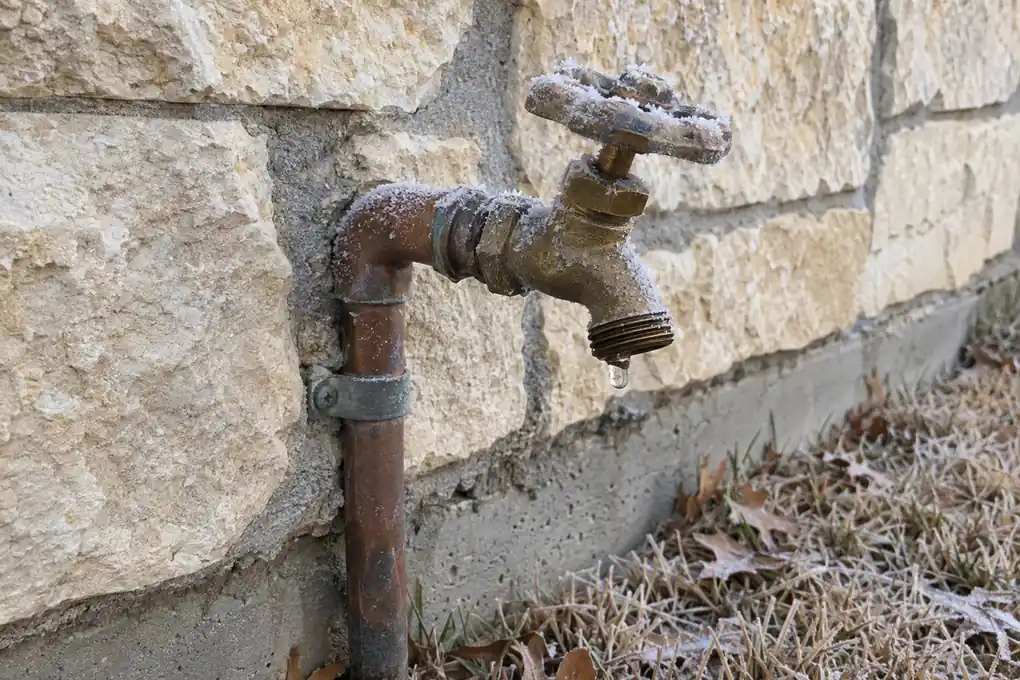
- Frozen hose bibs and outdoor faucetsAn outdoor faucet left with a hose attached can freeze and split inside the wall behind it.
- Frozen irrigation backflow preventersThe brass valve assembly on your sprinkler system sits above ground and cracks easily in a hard freeze.
- Frost, bulges or strange smellsFrost on a pipe, a bulge in the line or a sewer smell from a drain all point to ice in the system.
- Water heater lines that won't flowHot water lines and the connections at an attic or garage water heater freeze too.
- Pipes that split during the thawIce doesn't cause the flood; the thaw does. A split hidden by ice starts spraying once it melts.
Why Frozen Pipes Burst When They Thaw
Water expands by about 9 percent when it turns to ice. Inside a pipe, that ice forms a plug, and the water trapped between the plug and a closed faucet gets squeezed harder as the freeze goes on. The pipe usually doesn't split where the ice is. It splits somewhere along the line where that pressure has nowhere to go.
While the line is still frozen, the ice holds the crack shut, so everything looks fine. Then the temperature climbs, the plug melts and water starts pouring through a split nobody knew was there, often inside a wall or above a ceiling. That's why so many homes around Kyle flooded the day after the February 2021 freeze rather than during it.
So thawing a pipe properly is really two jobs: get the water moving again, and find any split before it has a chance to run. Skipping the second job is how a frozen pipe becomes a ruined kitchen.
How We Thaw Frozen Pipes Safely
- 1
Shut-off and triage
On the phone we help you decide: close the main valve now if you see or hear water, or leave it on and open the faucet if the line is simply frozen.
- 2
Find the frozen section
We trace the dry fixtures back to the blocked branch and check attic, wall and garage runs by touch and with thermal imaging.
- 3
Controlled thaw
We warm the pipe gradually, starting nearest the open faucet, with safe heat sources. Never a torch or open flame.
- 4
Pressure and leak check
Once water moves, we watch the line and the meter for any sign of a split before we leave.
- 5
Repair and protect
Any cracked section is cut out and replaced, and exposed runs are insulated so the same spot doesn't freeze again.
Faucets dry after a freeze?
Call before the thaw turns it into a flood.
Frozen Pipe Repair and Thawing Services
Thawing is usually only part of the job. Depending on what froze and what it damaged, a visit can include:
- Attic supply line thawingCareful thawing of PEX and copper lines above the ceiling, where most Kyle freezes happen.
- Exterior wall and garage pipesLines behind kitchen sinks, laundry boxes and garage walls.
- Outdoor faucet and hose bib repairReplacing split faucets, including frost-free models that cracked inside the wall.
- Irrigation backflow preventersThawing, repairing or replacing the brass assembly that feeds your sprinklers.
- Water heater connectionsThawing and checking the lines and valves at the heater.
- Split pipe repairCutting out the damaged section and replacing it with new pipe and fittings.
- Insulation and heat cableFoam sleeves and heat cable on the runs most exposed to cold.
- Main shut-off valve serviceChecking that your main valve closes fully, and replacing it if it doesn't.
Benefits of Professional Pipe Thawing
- No fire riskTorches and open flames start house fires every winter. We use controlled heat only.
- Hidden splits caught earlyWe check the line under pressure, so a crack doesn't open up hours after we leave.
- Water back on soonerKnowing where Kyle homes freeze first means less time searching and more time fixing.
- Fewer holes in your wallsFinding the frozen section precisely means less drywall gets opened.
- Protection for next timeInsulation, heat cable and a few habits keep the same pipe from freezing again.
What You Can Safely Do While You Wait
Do this now, before help arrives
- Open the faucet on the frozen line. Moving water helps melt the ice and relieves pressure on the pipe.
- Add gentle heat. A hair dryer, a heating pad or warm towels around an exposed pipe are safe. Start near the faucet and work backward.
- Warm the space. Open the cabinet doors under sinks on outside walls and raise the thermostat so warm air reaches the pipes.
- Never use an open flame. No torches, propane heaters or charcoal. They can set framing on fire and fill the house with carbon monoxide.
- Know where the main shut-off is. If a pipe starts spraying as it thaws, you'll need to close it fast.
- Call if you can't reach the pipe. Lines in the attic, inside walls or under the house need a professional.
Checking for Hidden Damage Once the Water Is Back
A pipe that froze once may have been weakened even if it didn't split. In the day or two after a freeze, it's worth a slow walk around the house:
- Look at ceilings under the attic and along outside walls for new stains or bubbling paint.
- Open the cabinets under every sink and feel the floor of the cabinet for damp.
- Check outdoor faucets and the sprinkler backflow preventer for drips when the water is on.
- With every tap and appliance off, watch the leak indicator on your water meter. If it moves, water is escaping somewhere.
If any of those checks worries you, call. A small drip found early is a quick repair; the same drip found a month later can mean new drywall, flooring and insulation.
How to Tell a Frozen Pipe From a Burst One
The two feel similar at first, but they call for different first moves, so it helps to know which one you're facing.
It's probably just frozen if
- a faucet gives no water or only a trickle,
- other faucets in the house still work,
- you can't see or hear water anywhere it shouldn't be, and
- the meter's leak indicator is still.
Leave the main valve on, open the dry faucet and call us to thaw the line under control.
It has probably burst if
- you can hear hissing or spraying in a wall, the attic or the garage,
- water is dripping from a ceiling, light fixture or cabinet,
- there's a wet patch on drywall, carpet or the garage floor, or
- the meter's leak indicator is spinning with every tap closed.
Close the main shut-off valve straight away, switch off the water heater and call. Every minute the water runs adds to the damage, and a pipe that burst while frozen will only get worse as the rest of the ice melts.
Pipe spraying after the thaw?
Shut off the main valve and call. We answer 24/7.
How to Keep Your Pipes From Freezing in Kyle
Kyle winters are mild most days, which is exactly why hard freezes catch people out. Homes here aren't built like homes up north: pipes in the attic and on outside walls have little protection. When the forecast calls for temperatures in the low 20s or below, take these steps the evening before:
- Let the faucets farthest from the main valve drip, hot and cold, so water keeps moving.
- Open the cabinet doors under kitchen and bathroom sinks on outside walls.
- Disconnect garden hoses and cover outdoor faucets with insulated covers.
- Shut off and drain your irrigation system, and wrap the backflow preventer.
- Keep the thermostat at 55°F or higher, even if you're away.
- Keep the garage door closed if water lines or the water heater are in there.
- Wrap exposed attic and garage pipes in foam pipe insulation.
- Find your main shut-off valve now, and make sure it actually turns.
Leaving town during a cold snap? Turn off the main valve and open a faucet to drain the lines before you go.
Frozen Pipe Thawing Across Kyle, TX
We thaw and repair frozen pipes in every Kyle neighborhood. Many newer homes in communities like Anthem and 6 Creeks have PEX supply lines running through the attic, which freeze quickly in a hard cold snap, while established areas such as Plum Creek and Hometown Kyle have older outdoor faucets and irrigation valves that split. For Kyle frozen pipe thawing anywhere in 78640, one number reaches us.
Frozen Pipe Questions
How long does it take to thaw a frozen pipe?
An exposed pipe can often be thawed in under an hour. A line inside a wall or deep in the attic takes longer, depending on how much of it froze and how cold it still is outside.
Will a frozen pipe thaw on its own?
Often, yes, once temperatures rise. The risk is what happens then: if the pipe split while frozen, it starts leaking the moment the ice melts, and nobody may be home to see it. Having it checked costs far less than a flooded ceiling.
Should I turn off the water if my pipes are frozen?
If you see water, hear spraying or notice a bulge in a pipe, shut off the main valve right away. If a faucet is simply dry, leave the main on and open that faucet so water can move as the ice melts, and keep an eye on it.
At what temperature do pipes freeze in Texas?
Water freezes at 32°F, but pipes inside a heated home usually hold out until outdoor temperatures sit in the low 20s for several hours. Pipes in attics, garages, outside walls and outdoor faucets freeze first.
Can PEX pipes freeze?
Yes. PEX copes with freezing better than copper because it can stretch a little, but it still freezes, and the fittings can crack. Attic PEX lines need the same protection as any other pipe.
Does homeowners insurance cover frozen pipes?
Many policies cover sudden damage from a pipe that froze and burst, especially if the home was heated at the time. Claims can be refused if the house was left unheated. Check your policy, and keep photos and notes of the damage.
Is it safe to use a space heater to thaw pipes?
An electric space heater can warm a room or a cabinet safely if it stays well away from anything that can burn and is never left running unattended. Keep it away from water on the floor, and never use a propane or kerosene heater indoors.
Why did only one faucet stop working?
Each faucet is fed by its own branch line. If one branch runs through a colder spot, like an outside wall or the attic, it can freeze while the rest of the house keeps flowing. That tells us exactly where to start looking.
Get Your Water Flowing Again
If you want your frozen pipes thawed safely and checked for splits, call Kyle Pipe Fix Pros now. If a line has already broken, we handle full burst pipe repair in Kyle on the same visit.
Call Now (512) 588-5459